How to Measure for a Bimini Top
Share article
Feeling lost in the sea of bimini top options? Don't worry, you're not alone! We understand the confusion of measuring for a bimini top. Our guide provides step-by-step instructions, with easy-to-follow illustrations, ensuring a perfect fit for your boat.
Contents
- Bimini Measuring How-to Video
- Bimini Top Size Chart
- Tools Needed to Measure for a Bimini
- What Bimini Measurments to Take
- Bimini Top by Boat Size Guide
- Selecting Bimini Top Fabric
Bimini tops aren't just accessories — they're lifesavers for boat owners looking to make the most out of their time on the water. Picture this: you're out on a sunny day, enjoying the breeze and the beautiful scenery when suddenly, the sun beats down relentlessly. That's where your bimini top swoops in, offering a cool oasis of shade and protection. But here's the catch: getting the right fit is key to unlocking the full potential of your bimini top. It's not just about staying dry during a rain shower or avoiding a painful sunburn; it's about ensuring every moment on your boat is pure bliss.
Bimini Top Size Chart
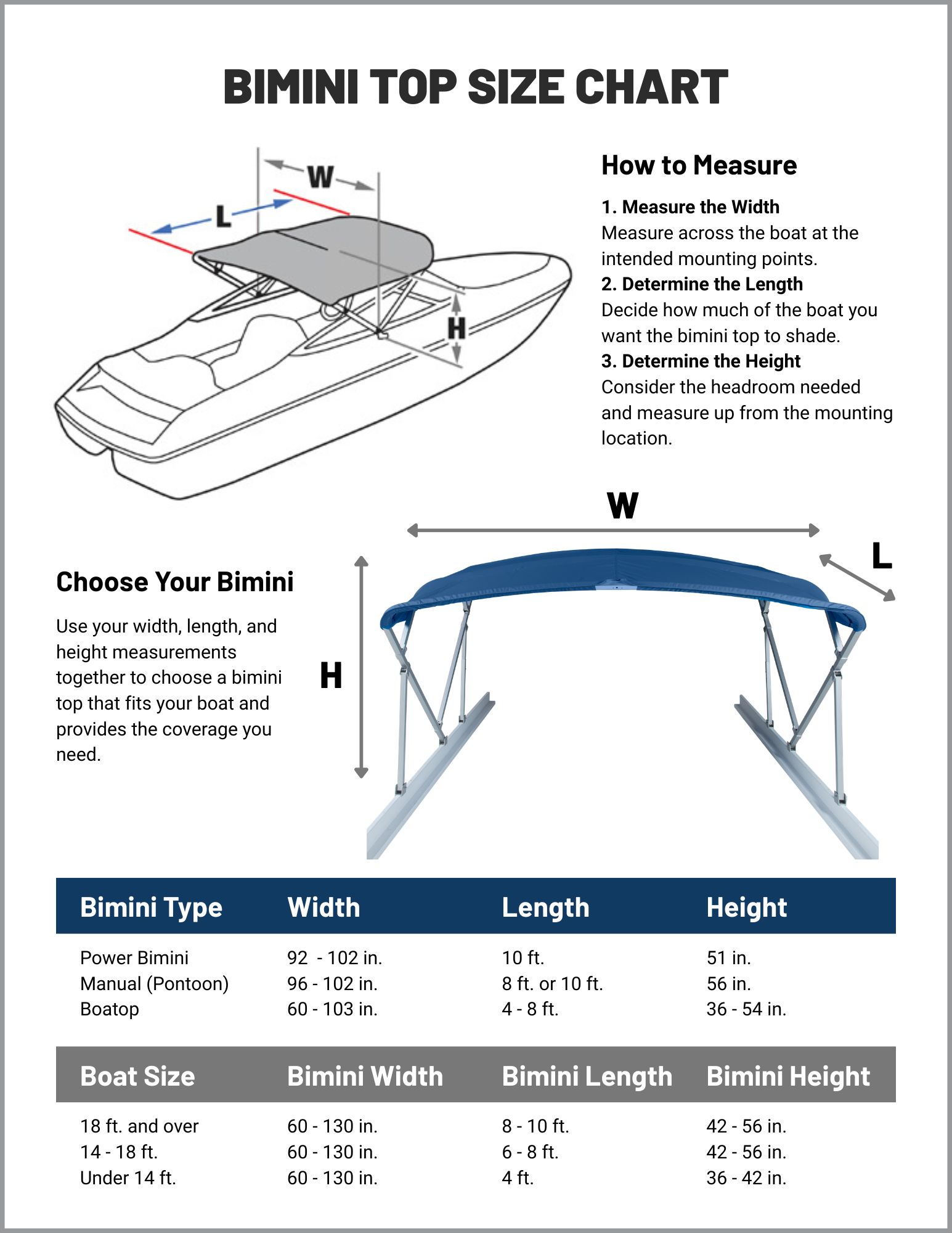
Use the bimini top size chart below to help you understand how to measure your boat for a bimini and how your boat's width, length, and other dimensions guide your options for shade on your vessel.
Key Dimensions for Measuring a Bimini Top
Before choosing a bimini top, you'll need to determine three key measurements: width, length, and height. Width ensures the frame fits between your boat's mounting points, length determines how much shade coverage you'll get, and height affects headroom and overall comfort.

Example Bimini Top Dimensions (SureShade® Power Bimini)
To see how these measurements come together, let's consider the SureShade Power Bimini. This model features an adjustable frame width of 92" to 102", a 10-foot length for generous shade coverage, and a 51" height that provides comfortable clearance for passengers.
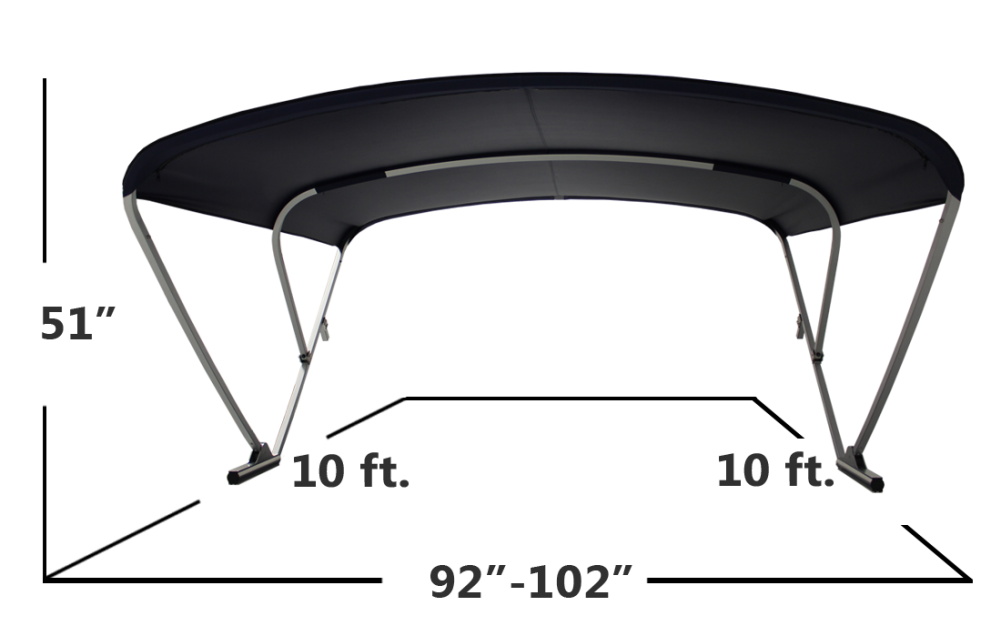
Remember that width is measured between the mounting points, length determines the amount of shade coverage, and height affects headroom beneath the canopy. Matching all three dimensions is the key to selecting the right bimini top for your boat.
Tools Needed to Measure for a Bimini Top
Before diving into the measuring process, let's make sure you have all the necessary tools at your disposal. Here's what you'll need:
- Tape Measure: A reliable tape measure is essential for accurately measuring the dimensions of your boat.
- Pen and Paper: Keep a pen and paper handy for jotting down measurements as you go. This will help you stay organized and ensure you don't forget any crucial details.
- A Helper: While not strictly necessary, having a helper can make the measuring process much easier. They can assist with holding the tape measure in place and double-checking measurements for accuracy.
- Access to Your Boat: Ensure your boat is easily accessible for measuring. This might involve clearing any clutter or obstacles that could obstruct your measurements.
By gathering these tools beforehand, you'll be well-prepared to tackle the measuring process with confidence and accuracy.
What Measurments to Take for a Bimini Top
As the wise adage goes, measure twice, cut once! Not that we’re cutting anything, but you get the idea. Taking the time to double-check your measurements ensures you'll make the right choice the first time around when selecting your bimini top.
1. Determine Your Boat’s Width
With the help of a friend, extend a tape measure from the mounting point on one side of the boat to the corresponding point on the opposite side. Ensure the tape measure is taut and record the measurement. This dimension represents your bimini top width and is critical for selecting the correct size. Keep in mind that some bimini tops feature an adjustable frame width, allowing them to accommodate a range of boat sizes.

2. Determine Your Desired Length
Determine the length of the area you want to shade with your bimini top, measuring from front to back along the section of the boat you wish to cover. The ideal bimini top length depends on your boat's layout and how much protection from the sun you want for passengers and seating areas. Once you've identified the desired coverage area, record the measurement for reference when selecting a top.

3-Bow vs. 4-Bow Bimini Tops
Another important decisions when choosing a bimini top is selecting the right frame configuration — 3-bow or 4-bow. The difference between a 3-bow bimini top and a 4-bow bimini top comes down to coverage and intended use.
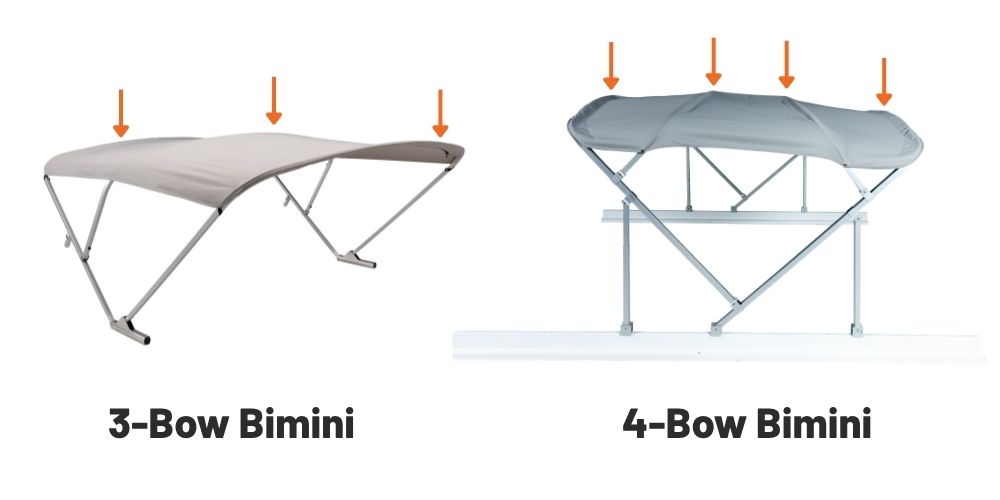
A 3-bow bimini top is a great choice for boaters who want reliable shade over the helm and main seating area without adding unnecessary length. Its compact design is typically lighter, easier to store, and works well on smaller pontoons and fishing boats where maximizing open deck space is important.
A 4-bow bimini top provides additional shade coverage thanks to its longer frame. This style is popular on larger pontoon boats and family-focused setups where more passengers need protection from the sun. The extra bow helps support a larger canopy, creating shade across a greater portion of the deck without sacrificing stability.
In general, choose a 3-bow bimini when you need moderate coverage and a more compact footprint, or opt for a 4-bow bimini if maximizing shade is your top priority. The best choice depends on your boat's dimensions, seating layout, and how much of the deck you want covered while enjoying time on the water.
3. Determine Your Desired Height
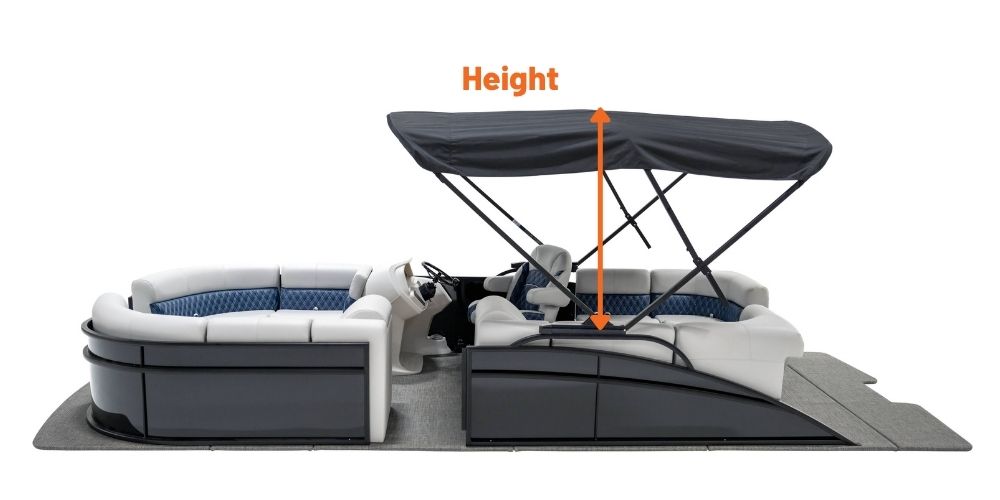
Measure from the mounting points vertically to determine your desired bimini top height. Select a height that provides comfortable standing clearance while maintaining the look and functionality you want for your boat. Once you've identified the appropriate height, record the measurement for reference when choosing a bimini top.
Bimini Top by Boat Size Buying Guide
Now that you've taken your measurements for a bimini top, let's review the available options for your bimini top:
Length: Bimini tops are typically available in lengths of 4', 6', 8' or 10'. Consider the size of your boat and the amount of coverage you desire when selecting the appropriate length.
Height: Choose from bimini top heights of 36", 42" or 54", representing the maximum standing height under the frame, measured from the mounting location points. Ensure you select a height that provides ample headroom and coverage.
Width: Bimini top width options typically range from 60" to 103", in increments of 6". Select a width that matches your measurement to ensure a proper fit for your bimini top.
| Boat Size | Bimini Width Range | Bimini Length | Bimini Height |
| Under 14' | 60" to 130" | 4' | 36" - 42" |
| 14' - 18' | 60" to 130" | 6' - 8' | 42" - 56" |
| 18' and over | 60" to 130" | 8' - 10' | 42" - 56" |
Please note: The width range specified is based on the measurement from the mounting point on one side of the boat to the same location on the opposite side. Widths are available in increments of 6".
Selecting Bimini Top Fabric
Now that you know the size of bimini boat top you need, it’s time to consider fabric options. When it comes to selecting the best fabric for your bimini top, durability, UV resistance and water repellency are key factors to consider.
One of the most popular choices is solution-dyed polyester fabric, known for its exceptional strength and colorfastness. This type of fabric offers excellent UV protection, ensuring your bimini top retains its vibrant color and structural integrity even after prolonged exposure to sunlight. Additionally, solution-dyed polyester is highly water repellent, keeping you and your passengers dry during unexpected rain showers. Another excellent option is acrylic fabric, which boasts similar UV resistance and water repellency properties. Acrylic fabric is also known for its breathable nature, allowing for enhanced airflow and comfort on hot days.
Whichever fabric you choose, be sure to select a reputable brand known for producing high-quality, marine-grade materials. Investing in a durable and UV-resistant fabric will ensure your bimini top stands the test of time and provides reliable protection for years to come.
Trusted Bimini Top Experts
Lippert proudly offers a diverse range of bimini shades, including products from trusted brands like SureShade and Taylor Made. SureShade, known for its cutting-edge retractable shade systems, brings innovation and convenience to the boating world with its sleek and stylish designs. Taylor Made, on the other hand, is renowned for its high-quality bimini tops crafted from durable materials, ensuring long-lasting protection and comfort on the water. With these esteemed brands under its umbrella, Lippert continues to lead the way in providing boat owners with top-notch bimini shade solutions tailored to their specific needs and preferences.
Explore Our Bimini Top Technical Resources

Frequently Asked Questions about Measuring a Bimini
-
How long should a bimini top be?
A bimini top typically extends around six feet in length, providing adequate shade for most boats. However, larger pontoons may require an eight-foot bimini for sufficient coverage.
-
What size boat canopy do I need?
For the perfect fit, remember to consider the width and length of your boat, desired coverage area and mounting system. Ensure you choose the correct size boat canopy by following the key factors outlined in our blog post on how to measure for a bimini top.
-
What is the difference between three and four bows on a bimini top?
The main difference between three and four bows on a bimini top lies in their structural design and coverage area. A three-bow bimini typically consists of three support poles or bows, providing a simpler and more streamlined appearance. On the other hand, a four-bow bimini features an additional bow, offering increased support and stability, especially for larger bimini tops or in windy conditions. The choice between three and four bows often depends on factors such as the size of the boat, desired coverage area and personal preference for aesthetics and functionality.
-
Are boat bimini tops universal?
Boat bimini tops are not universally compatible due to variations in boat sizes, shapes and mounting systems. While some bimini tops may be adjustable or designed to fit a range of boats, it's essential to ensure compatibility by considering factors such as the width and length of your boat, mounting point locations and the type of bimini frame. Customization options and measurements specific to your boat are often necessary to ensure a proper fit and optimal performance of the bimini top.
-
How do I measure a bimini top for my boat?
To measure a bimini top, you need three key dimensions: width, length, and height. Measure the distance between the mounting points for width, determine how much shade coverage you want for length, and measure from the mounting location to the desired canopy height. These measurements will help you choose the correct bimini top size.
-
Do I measure the boat or the existing bimini top?
If your current bimini top fits correctly, you can measure the existing frame and fabric. If you're replacing an ill-fitting top or installing one for the first time, it's best to measure the boat's mounting points and intended coverage area. This helps ensure a more accurate fit.
-
Where should I measure the width of a bimini top?
The width should be measured between the mounting points on each side of the boat where the bimini frame will attach. This measurement is often referred to as the mounting width and is one of the most important dimensions when selecting a bimini top.
-
How tall should a bimini top be?
A bimini top should be tall enough to provide comfortable headroom while allowing passengers to move beneath it safely. The ideal height depends on your boat layout, seating configuration, and how much shade coverage you want while underway.
-
Are pontoon boat bimini tops measured differently?
The basic measuring process is the same, but pontoon owners should pay close attention to the pivotal mounting points on each side of the boat. Accurate measurements between these points ensure the pontoon bimini top opens and operates properly.
-
What happens if I buy the wrong size bimini top?
A bimini top that is too narrow may not reach the mounting points, while one that is too wide may not install correctly. Incorrect height or length can also affect shade coverage, visibility, and passenger comfort. Proper measurements help avoid installation issues and unnecessary returns.
-
What measurements are needed to replace bimini top fabric?
When replacing only the fabric, you'll typically need the frame width, the number of bows, and the length of each fabric section. Matching the replacement fabric to the existing frame dimensions helps ensure a proper fit.
-
How many bows should my bimini top have?
Most recreational boats use either a 3-bow or 4-bow bimini top. A 3-bow design generally provides shorter coverage, while a 4-bow bimini top offers a larger shaded area. The best option depends on your boat size and shade requirements.
-
Can a bimini top be customized to fit my boat?
Yes, in a certain sense. Many bimini tops are available in multiple widths, lengths, heights, frame materials, and fabric colors. Taking accurate measurements is the first step toward selecting a configuration that fits your boat and your boating style.
-
How do I know if my boat can support a larger bimini top?
A larger bimini top may require additional mounting space, stronger support hardware, or a different frame configuration. Before upgrading, verify your boat's available mounting area and ensure the larger top will not interfere with equipment, seating, or visibility.