How to Stop That Pesky Trailer Sway
Share article
Have you ever been driving down the highway, and suddenly, out of nowhere, someone goes flying past you in the next lane with their trailer rocking side to side like a fish through water?
Or worse, has this swerving side-to-side motion ever happened to you?
This back-and-forth motion is called trailer sway, and it’s not only obnoxious. It can become downright dangerous if left unchecked.
In this blog post, we’ll talk about the causes of trailer sway and four methods to prevent it, including using a sway control device.
What is Trailer Sway?
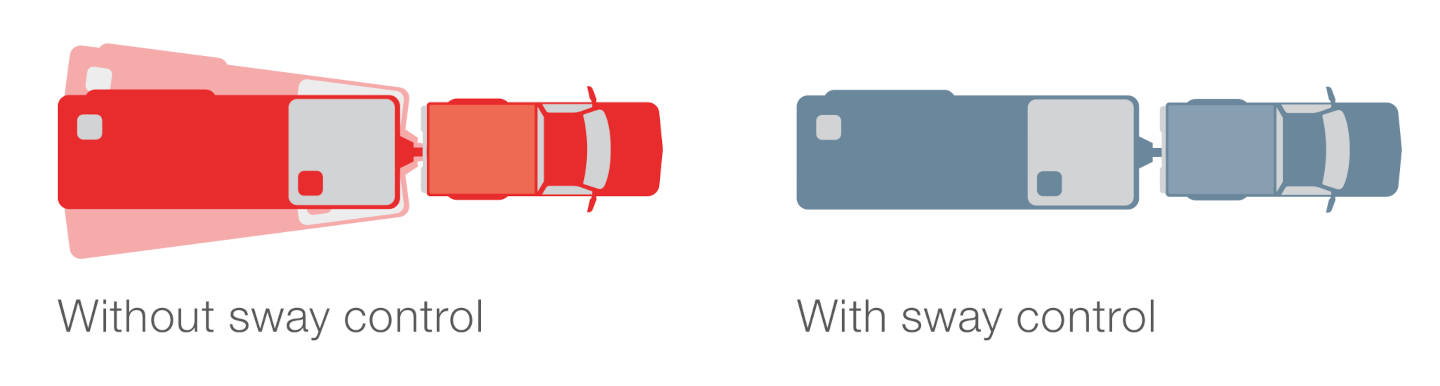
Trailer sway or just “sway” is a lateral, back-and-forth motion that can occur when towing a trailer. During a sway event, the trailer pivots side-to-side on its hitch connection point like a pendulum. This lateral movement causes the trailer to be continuously out of alignment with the tow vehicle as it travels down the road.
Trailer sway can be slight or aggressive and can range from a mere annoyance to a potentially hazardous condition. It can also affect the tow vehicle in varying degrees, even leading the vehicle and driver to lose control.
What Causes Trailer Sway?
Let’s say you’ve outfitted your vehicle with all the right towing equipment, you’ve hitched up your trailer flawlessly, and you’ve just embarked on your journey only to be plagued by an incessant jostling and shaking from the trailer.
Gritting your teeth, you ask yourself, “Why is my trailer swaying? I did everything right!”
As it turns out, buying the right towing accessories and hooking up correctly don't necessarily guarantee a fool-proof solution to reduce sway.
The truth is, the number-one cause of trailer sway is improper distribution of weight. This has to do with how you load your trailer. If your trailer is out of balance, so to speak, a fancy new hitch accessory won’t solve the problem.
Other Causes of Trailer Sway:
- Changing lanes too quickly
- Passing vehicles
- Crosswinds
Does Trailer Length Affect Sway?
Yes. Longer trailers are generally more susceptible to sway than shorter trailers because they have more surface area exposed to wind and greater leverage behind the tow vehicle.
This doesn't mean long trailers are unsafe to tow. It simply means proper loading, adequate tongue weight, and the use of sway control equipment become even more important as trailer length increases.
Travel trailers, enclosed cargo trailers, and large utility trailers often benefit from additional sway control measures when traveling at highway speeds.
How to Prevent Trailer Sway
The first step in preventing sway in your trailer is to load it properly. A trailer relies on a specific balance of weight across its axle(s). When this weight isn’t distributed correctly – that is, when too much weight is loaded in front or behind the axle – the trailer can’t perform as intended.
1. Load Your Trailer Following the 60/40 Trailer Rule
The ideal distribution of weight is 60/40, meaning 60% of the weight in front the axle and 40% behind the axle. This creates the precise amount of tongue weight – the downward force at the hitch connection – that the vehicle and trailer need for safe, smooth towing.
This doesn’t mean you need to weigh each item and draw up a detailed plan to make sure the weight is perfectly distributed.
The 60/40 trailer rule is a guideline. Follow it as best you can.
When loading your trailer, be intentional about adding more cargo in front than in the rear of the trailer. However, don’t overdo it. It’s 60/40, not 80/20 and not 100/0. It’s also not 50/50.
When your trailer doesn’t follow the 60/40 rule, you’ll know it.
If too much cargo is loaded in front of the trailer axle, it can lead to poor braking conditions. If too much weight is placed behind the axle, it will lead to – you guessed it – trailer sway.
2. Add a Sway Control Unit or Two
A properly loaded trailer is the number-one best thing you can do to avoid trailer sway. However, it doesn’t always prevent the unexpected.
Crosswinds and passing vehicles can send your vehicle-trailer combo into a sway event.
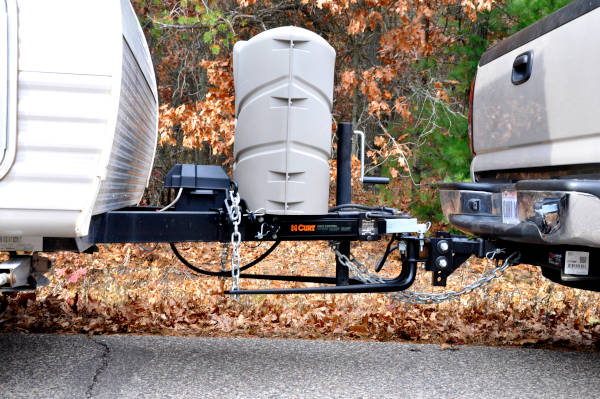
To add more resistance to this side-to-side motion, you can add a sway control unit to your hitch connection. A sway control (or colloquially “trailer sway bar”) is a simple device that installs between your hitch and trailer tongue and restricts movement using a brake-pad-like bar. A sway control helps combat annoying back-and-forth movement while still allowing the vehicle and trailer to turn as needed.
Two sway controls are actually recommended, and they work best when installed together with a weight distribution hitch.
3. Get Sway Control & Weight Distribution in One
While many weight distribution hitches offer compatibility with a sway control unit, some are equipped with integrated sway control technology.
The TruTrack™ weight distribution system is a highly engineered device that both levels your vehicle-trailer combination and resists trailer sway, giving you exceptional control on the road. TruTrack uses an innovative spring and cam system, built into the head, as well as fixed support brackets to keep the trailer aligned and towing smoothly.
4. Invest in Sway Command®
Sway Command is an electronic solution to sway control. It uses microprocessor technology and your electric trailer brakes to actively respond to and combat trailer sway.
In the event that your trailer begins to sway, Sway Command will automatically apply the trailer brakes – even before the driver has a chance to react – to help combat and contain the swerving motion.
The device mounts onto the exterior of your trailer and simply gets wired into the electric brakes.
Discover How Effective Sway Command Can Be!
What Should You Do If Your Trailer Starts Swaying?
If your trailer begins to sway while driving, stay calm and avoid making sudden steering corrections.
Instead:
- Keep the steering wheel pointed straight ahead
- Gradually reduce speed
- Avoid accelerating
- Avoid slamming on the brakes
- Allow the trailer to stabilize naturally
Sudden steering inputs can worsen a sway event and increase the risk of losing control. If your trailer is equipped with electronic sway control technology, the system may automatically apply the trailer brakes to help stabilize the trailer.
-
Why does my trailer sway at highway speeds?
Trailer sway at highway speeds is usually caused by improper trailer loading, insufficient tongue weight, strong crosswinds, passing vehicles, or sudden steering inputs. In most cases, weight distribution is the primary factor. A properly loaded trailer should have approximately 60% of its weight in front of the axle and 40% behind it.
-
What should I do if my trailer starts swaying?
If your trailer begins to sway, stay calm and keep the steering wheel pointed straight ahead. Avoid sudden steering corrections or hard braking. Gradually reduce speed and allow the trailer to stabilize. If equipped, a trailer sway control system or electronic sway control device can help reduce the motion.
-
How much tongue weight do I need to prevent trailer sway?
Most trailers tow best when tongue weight is between 10% and 15% of the total loaded trailer weight. Too little tongue weight is one of the most common causes of trailer sway because it allows the trailer to pivot more easily behind the tow vehicle.
-
Can a weight distribution hitch stop trailer sway?
A weight distribution hitch can help reduce trailer sway when properly installed and adjusted. Some systems include built-in sway control features that actively resist side-to-side trailer movement while also helping distribute weight more evenly across the tow vehicle and trailer axles.
-
Do I need sway control for a travel trailer?
Many travel trailer owners benefit from sway control, especially when towing longer or heavier trailers. Sway control devices help reduce movement caused by crosswinds, passing trucks, uneven road surfaces, and emergency maneuvers.
-
Can too much weight in the rear of a trailer cause sway?
Yes. Loading too much cargo behind the trailer axle can reduce tongue weight and make the trailer unstable. This imbalance often causes the trailer to sway, particularly at higher speeds or when encountering wind gusts.
-
What speed causes trailer sway?
Trailer sway can occur at any speed, but it becomes more noticeable and potentially dangerous at highway speeds. If a trailer consistently sways above a certain speed, it may indicate improper loading, insufficient tongue weight, or a towing setup issue that should be corrected before continuing.
-
Does trailer length affect sway?
Longer trailers can be more susceptible to sway because they have a greater surface area exposed to wind and a longer distance between the axle and hitch. Proper loading, sway control, and a correctly matched tow vehicle become increasingly important as trailer length increases.
-
What is the best way to prevent trailer sway?
The best way to prevent trailer sway is to load the trailer correctly, maintain proper tongue weight, stay within towing capacity ratings, and use a quality sway control or weight distribution system when appropriate. Regularly inspecting tires, suspension components, and hitch equipment can also improve towing stability.
-
How Do You Stop Trailer Sway?
To stop trailer sway, reduce speed gradually, keep the steering wheel straight, and avoid sudden braking or steering corrections. The best way to prevent trailer sway is to maintain proper tongue weight, follow the 60/40 trailer loading rule, and use a sway control or weight distribution hitch when needed.
Disclaimer: These photographs, recommendations, and approximations are intended for demonstration purposes only and do not reflect the specifications of any particular tow vehicle, recreational vehicle, or trailer. Always consult the manufacturer’s Owner’s Manual.