

Parts of a Boat from Bow to Stern & Everything in Between
Share article
Understanding the parts of a boat is essential, whether you’re new to boating or looking to maintain, upgrade, or repair your vessel. This guide breaks down every major component from bow to stern, explains what each part is called, where it is located, and why it matters on the water. By learning common boat terminology like hull, cleats, gunwale, port, and starboard, you’ll be able to talk confidently about your boat, make informed decisions when buying parts, and stay safer on the water.
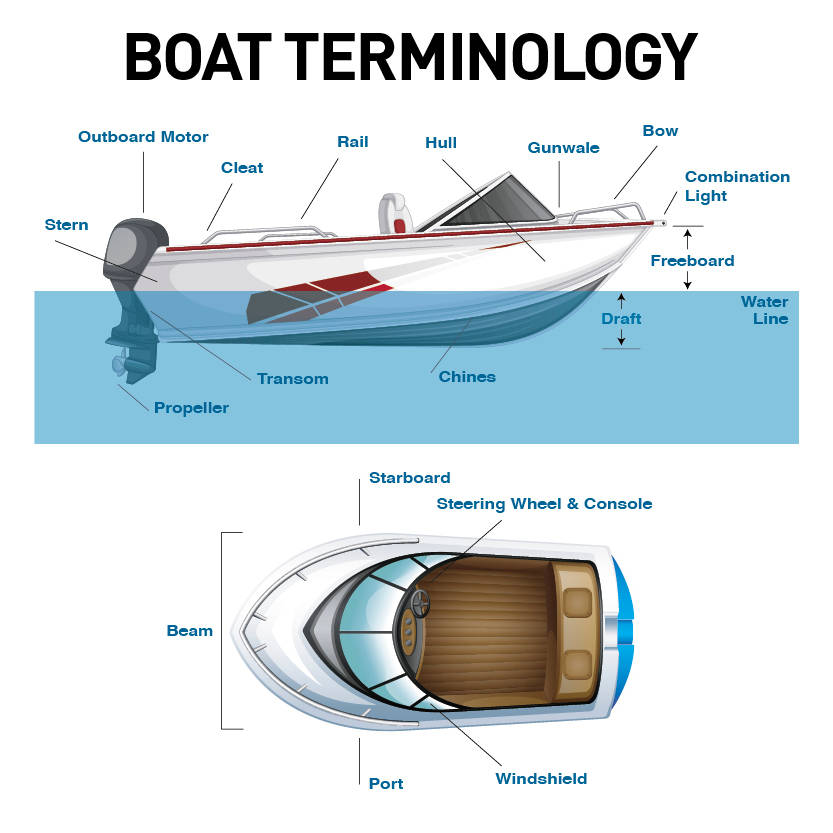
- Beam - overall width of a boat measured at the widest portion
- Bow - front of the boat
- Chine - angle that forms at the very bottom of the hull
- Cleats - tie-down points for ropes
- Combination Light - red and green light to indicate port and starboard
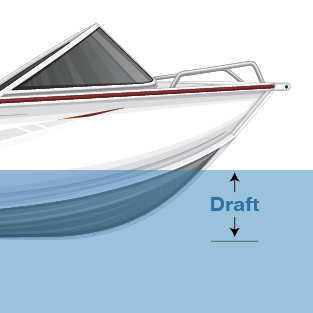
- Draft - distance between the waterline and the lowest point of the hull
- Freeboard - distance from the waterline to the top edge of the boat
- Gunwale - upper edge or rim of the boat
- Hull - waterproof body of the boat
- Outboard Motor - propelling motor mounted outside the transom
- Port - left side of the boat
- Propeller - bladed shaft that spins to move the boat
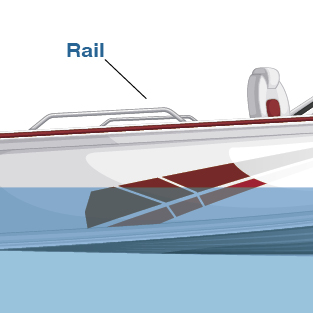
- Rails - passenger grab handles on the gunwale
- Starboard - right side of the boat
- Steering Wheel & Console - controls for driving the boat
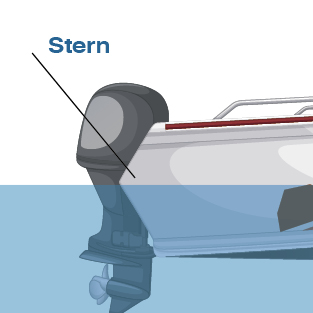
- Stern - back of the boat
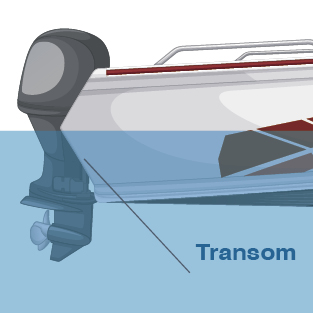
- Transom - rear panel or edge of the boat
- Waterline - intersection of the hull and the water’s surface
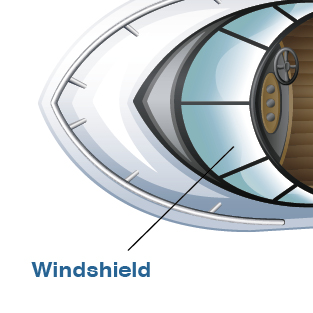
- Windshield - transparent barrier at the bow to protect passengers
What are the parts of a boat called?
We’ve created a list of boat parts and what they are called. We include a definition of the boat parts, why they are important, and where they are located on the boat.
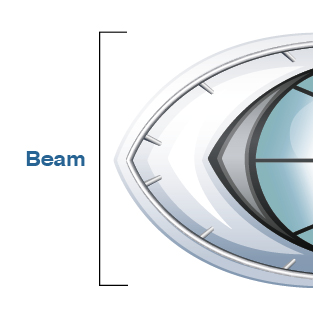
1. What is a beam of a boat?
The boat beam is the overall width of a boat measured at the widest portion of the waterline.
The beam section of a boat is important for two reasons:
1. The beam size determines if passage around an obstacle in the water can be done safely.
2. The beam also determines the boat’s overall stability.


4. What is the cleat on a boat?
Cleats are especially important to docking and tying up your boat. They are used to tie ropes through when you are securing your boat to a dock or slip. They are securely affixed to your vessel in various places on your boat that offer the best functionality when docking.

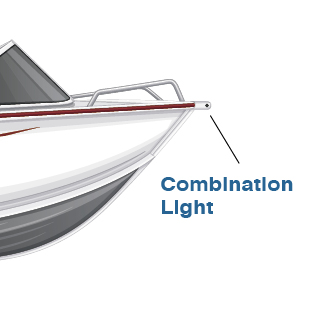
5. What are combination lights on a boat?
The combination lights on a boat, also known as sidelights, are red and green lights visible to other boats approaching either head-on or on the side.
The red light indicates the boat’s port (left) side, and the green reflects the vessel’s starboard (right) side.
7. What is the freeboard of a boat?
A boat’s freeboard is the distance from the waterline to the upper deck level where water can enter the boat, also known as the lowest point of sheer.
This measurement, or freeboard, is typically higher on offshore and console boats than skiffs or bay boats. The higher the freeboard, the more protected the boat is from being washed out.


8. What is the hull?
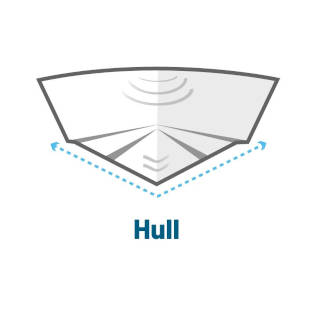
The hull is the watertight shell of the boat—the part that sits in the water and supports the entire structure. It’s sealed to keep water out, providing buoyancy so the boat floats. The hull’s design plays a major role in how the boat performs, influencing speed, stability, and comfort on the water.
Boat hulls are generally categorized by how they interact with the water. Some common types include:
- Displacement hulls
- Planing hulls
- Semi-displacement hulls

10. What is starboard and port, and why are they called that?
Starboard is on the right side of the boat when looking toward the bow, and port is the left side of the boat.
Before ships had rudders on their centerlines, they were controlled by a steering oar. Sailors called the right side the steering side, which became starboard, the combination of the Old English words, stéor meaning "steer" and bord meaning "the side of a boat."
Port came about because as boat sizes got bigger, so did the steering oar. This size increase made it much easier to tie up a boat to a dock on the left side of the oar, known as the larboard, the "loading side." Larboard was too similar to starboard, so it was changed to port, as this was the side that faced the port when entering the dock and allowed the ship's supplies to be ported aboard.

11. What is a prop on a boat?
The motor powers boat propellers. They typically have three to five blades that turn on a shaft - and the more blades, the higher propulsion.
Boat propellers include blades that turn on a shaft powered by the motor. Propellers can have three, four or five blades. Typically, the more blades on the propeller, the more propulsion can be achieved. While the motor provides the power, the propeller is where all the action occurs. Propeller blades displace water to create the forces that move a boat forward.

13. What is the steering wheel and console of a boat?
The boat’s steering wheel is also known as the boat’s wheel. It is part of the steering mechanics at the boat’s helm, and as you would imagine, steers the boat. The wheel changes the direction of the boat’s rudder or tiller as the boat goes through the water.
The console is where the controls are located, including steering, ignition, radio, and other electronic devices. Consoles may have a small area for storage.


17. What is the windshield of a Boat?
The boat windshield is a major part of a boat. It deflects water and wind and keeps all aboard from getting soaked. Some boats have windshields, while others have windscreens, usually made from Plexiglass.
Sailboats typically have portlights which are small windows on the side of the boat that let light into the cabin.
Seasonal Maintenance Checklist for Key Boat Parts
To keep your boat operating safely and reliably, follow this seasonal check list:
-
Hull Inspection: Check for cracks, blisters, and marine growth below the waterline.
-
Cleats & Docking Hardware: Ensure all cleats and tie-off points are tight and corrosion-free.
-
Propeller: Look for dents or bends that can affect thrust and vibration.
-
Gunwale & Rails: Inspect for loose fittings or wear that could compromise passenger safety.
-
Navigation Lights: Test all lights before night operation to ensure visibility.
These checks help prevent unexpected issues and extend the life of your parts.
Frequently Asked Questions About Parts of a Boat
1. What are the main parts of a boat and what do they do?
The main parts of a boat include the bow (front), stern (rear), hull (body), gunwale (top edge), cleats (for tying ropes), propeller (moves water to propel the boat), and transom (rear panel where the motor attaches). Each part has a specific role in navigation, stability, and performance on the water.
2. What’s the difference between port and starboard?
On a boat, port refers to the left side when facing the bow (front), and starboard is the right side. These nautical terms help avoid confusion when communicating directions.
3. Why is knowing boat parts important for safety and maintenance?
Understanding boat parts helps you communicate with professionals, perform basic maintenance, and ensure safety on the water. Knowing where things are and what they do can help you respond quickly in emergencies or when checking equipment before departure.
4. What is the hull and why is it important?
The hull is the watertight body of the boat that floats and supports the vessel. Its shape and material affect the boat’s stability, speed, and handling.
5. How deep can a boat go into the water? What does draft mean?
The draft is how deep the bottom of the boat sits below the waterline. A deeper draft needs more water depth to avoid grounding, which is crucial when entering shallow areas.
6. What is a cleat and how is it used?
A cleat is a metal fitting on a boat where ropes or lines are tied when docking or anchoring your vessel. Proper cleat usage ensures secure mooring.
7. What are navigation lights and why are they required?
Boats use navigation lights (commonly red on port and green on starboard, plus white lights) to show their position and direction at night or in low visibility conditions, helping prevent collisions.
These photographs, recommendations, and approximations are intended for demonstration purposes only and do not reflect the specifications of any watercraft. Always consult the manufacturer’s Owner’s Manual.

