How to Install a Pontoon Boat Ladder: A Step-by-Step Guide
Share article
Installing a pontoon boat ladder correctly helps create a safer, easier boarding experience before and after every outing. Pontoon boat ladder installation is more than attaching hardware to a deck. The process affects stability, accessibility, long-term durability, and everyday convenience on the water. Whether you're replacing an aging ladder or upgrading to a more comfortable design like the SureStep™ pontoon boat ladder, understanding the installation process can help you achieve dependable performance.
A well-installed ladder should feel secure under load, provide easy access for swimmers and passengers, and withstand repeated exposure to water and movement. This guide walks through the general installation process, key preparation steps, and important considerations for selecting the right ladder for your pontoon setup.
In This Guide
- Why Pontoon Boat Ladder Installation Matters
- When to Replace or Install a New Pontoon Ladder
- Ladder Installation Video
- Common Pontoon Boat Ladder Types
- Tools & Materials You'll Need
- Pontoon Boat Ladder Installation Steps
- Installation Tips for Long-Term Performance
- Post-Installation Safety Checklist
- Frequently Asked Questions About Pontoon Boat Ladder Installation
Why Pontoon Boat Ladder Installation Matters
Installing a pontoon boat ladder properly creates a safer, more dependable boarding experience and helps protect your boat from unnecessary wear over time.
A ladder is one of the most frequently used access points on a pontoon. Family members, swimmers, and guests rely on it every time they enter or exit the water. Poor installation can lead to loose mounting points, uneven support, difficult boarding angles, and unnecessary stress on your deck structure.
A properly installed ladder can help provide:
- More stable boarding and exiting
- Better weight distribution
- Reduced movement during use
- Improved comfort for passengers
- Longer hardware life
- Greater confidence while on the water
Many pontoon owners don't think about ladder function until they begin experiencing issues. Wobbling steps, corrosion, difficult climbing angles, or narrow rung spacing often signal that replacement or repositioning may be worth considering.

When to Replace or Install a New Pontoon Ladder
Replacing or installing a pontoon ladder often becomes necessary when your current setup no longer meets your needs or shows signs of wear.
Sometimes a ladder simply reaches the end of its service life. Other situations involve upgrading for improved comfort or accessibility.
Common reasons for pontoon ladder replacement include:
- Bent or damaged mounting hardware
- Corrosion or material wear
- Missing or broken steps
- Difficult access for children or older passengers
- A ladder that sits too shallow in the water
- Upgrading for greater comfort and stability
Modern ladder designs can offer noticeable usability improvements compared to older systems. Wider steps, improved angles, and deeper water entry often create a more user-friendly experience. Still not sure if your current ladder is worth replacing? Check out our, Is and Easy-Climb Pontoon Boat Ladder Worth It, to learn what features can improve comfort, accessibility, and onboard confidence.

Common Pontoon Boat Ladder Types
Pontoon ladders come in several common styles, and choosing the right type helps determine both installation requirements and everyday usability.
Different ladder locations and mounting styles can affect boarding access and available deck space.
Rear Entry Ladders
Rear entry ladders mount near the stern and provide a familiar boarding location.
These are commonly found on pontoons used for swimming and family recreation because they offer easy access from behind the boat.
Side-Mount Ladders
Side-mount ladders attach along one side of the pontoon.
They can work well when stern space is limited or when a specific boarding location better suits the layout of the boat.
Under-Deck Ladders
Under-deck ladders store beneath the deck and deploy when needed.
Their low-profile design helps preserve deck space while maintaining a clean appearance.
Deep Water Ladders
Deep water ladders extend farther below the waterline for easier climbing.
Additional submerged steps can make reboarding more comfortable, especially after swimming or watersports activities.
See a Deep Water Ladder Upgrade in Action
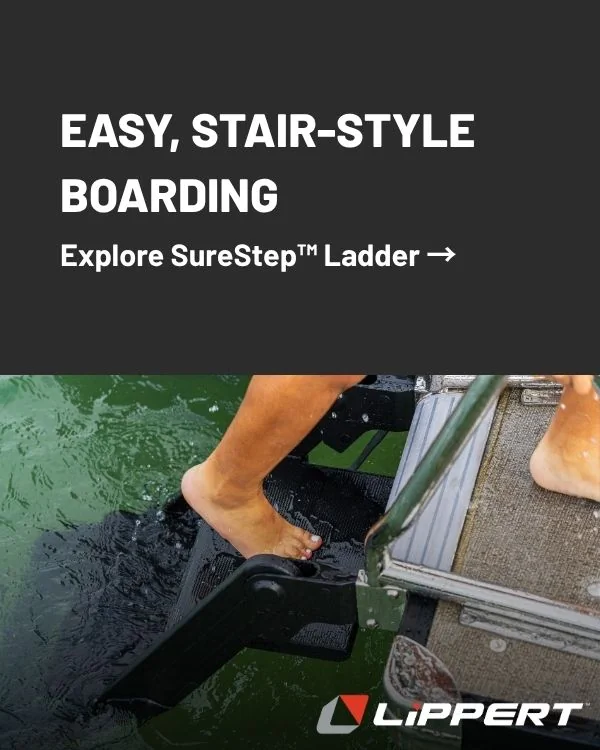
Watch how the SureStep pontoon boat ladder takes that concept further with wide, angled steps and a thoughtful design built to create a more stable, user-friendly boarding experience.
Tools & Materials You'll Need
Gathering tools before installation helps simplify the process and reduces interruptions.
Exact requirements vary by ladder design, but many pontoon boat ladder steps involve similar equipment.
Typical tools and materials include:
- Drill and marine-grade drill bits
- Tape measure
- Pencil or marker
- Socket set
- Wrenches
- Screwdriver
- Marine-grade sealant
- Stainless steel mounting hardware
- Safety glasses
- Straight edge or level
Always review the ladder manufacturer's installation instructions before drilling into the deck or support structure.
Pontoon Boat Ladder Installation Steps
The following step-by-step guide is an overview of the process for installing a pontoon boat ladder. We'll use the SureStep pontoon ladder as our example. Most pontoon boat ladder installation projects follow a similar sequence regardless of ladder style.
Careful preparation can improve fitment and reduce the chance of alignment issues.
Step 1: Choose the Mounting Location
Selecting the right location helps ensure safe operation and comfortable access.
Choose a position with enough clearance for deployment, passenger movement, and structural support beneath the deck.
Consider:
- Distance from seating
- Clearance while folded
- Water access angle
- Nearby railings
- Structural support underneath
Avoid locations where hardware could interfere with wiring, fuel systems, or existing components.
Step 2: Measure & Mark Mounting Points
Accurate measurements help ensure proper alignment and reduce installation issues.
Use a tape measure and verify spacing multiple times before drilling.
Helpful measurement practices include:
- Centering the ladder
- Confirming deployment clearance
- Measuring bolt spacing
- Checking deck support locations
- Marking pilot hole positions
Minor alignment issues can become noticeable once weight is applied.
Step 3: Drill & Seal Mounting Holes
Proper drilling and sealing helps protect your deck from moisture intrusion.
After drilling pilot holes, apply marine-grade sealant around hardware locations before installation.
This added step can help:
- Reduce water intrusion
- Protect deck materials
- Minimize long-term wear
- Improve mounting integrity
Step 4: Secure the Ladder
Attach the ladder according to manufacturer instructions and tighten hardware evenly.
Avoid over-tightening hardware, which can place unnecessary stress on mounting surfaces.
Step 5: Test Stability & Function
Testing confirms proper installation before heading out on the water.
After installation:
- Deploy and retract the ladder several times
- Verify smooth movement
- Check mounting tightness
- Apply light weight gradually
- Inspect for movement or shifting
Installation Tips for Long-Term Performance
Small installation details often have a significant impact on long-term ladder performance.
A few extra checks during installation can help preserve function over time.
Helpful practices include:
- Use marine-grade hardware
- Confirm deck support locations
- Recheck measurements before drilling
- Inspect sealant coverage
- Verify folding clearance
- Tighten hardware evenly
- Retest hardware after initial use
Periodic inspections before and after every outing can also help identify issues early.
Post-Installation Safety Checklist
A quick inspection before launching helps ensure your new ladder performs as expected.
Review these items:
- All mounting hardware feels secure
- Ladder deploys smoothly
- No movement occurs during use
- Sealant coverage remains intact
- Folding components operate correctly
- Steps feel level and stable
Taking a few minutes to inspect your ladder can help support long-term reliability and greater confidence on the water.
Frequently Asked Questions About Pontoon Boat Ladder Installation
-
How Do You Install a Pontoon Boat Ladder?
Most pontoon boat ladder installation projects involve selecting a mounting location, measuring hardware placement, drilling holes, sealing openings, attaching hardware, and testing functionality before use.
-
Can I Replace My Existing Pontoon Ladder?
Yes. Many pontoon owners replace aging or damaged ladders with upgraded designs that improve accessibility and comfort.
-
Where Should a Pontoon Ladder Be Installed?
The ladder should be mounted in a location that provides sufficient structural support, boarding clearance, and safe access for passengers.
-
What Type of Sealant Should Be Used During Installation?
Marine-grade sealant is commonly used to help reduce water intrusion around mounting hardware.
-
Why Choose a SureStep Pontoon Boat Ladder?
The SureStep pontoon boat ladder features wide, angled steps designed to create a more comfortable boarding experience compared to traditional narrow ladder designs.